


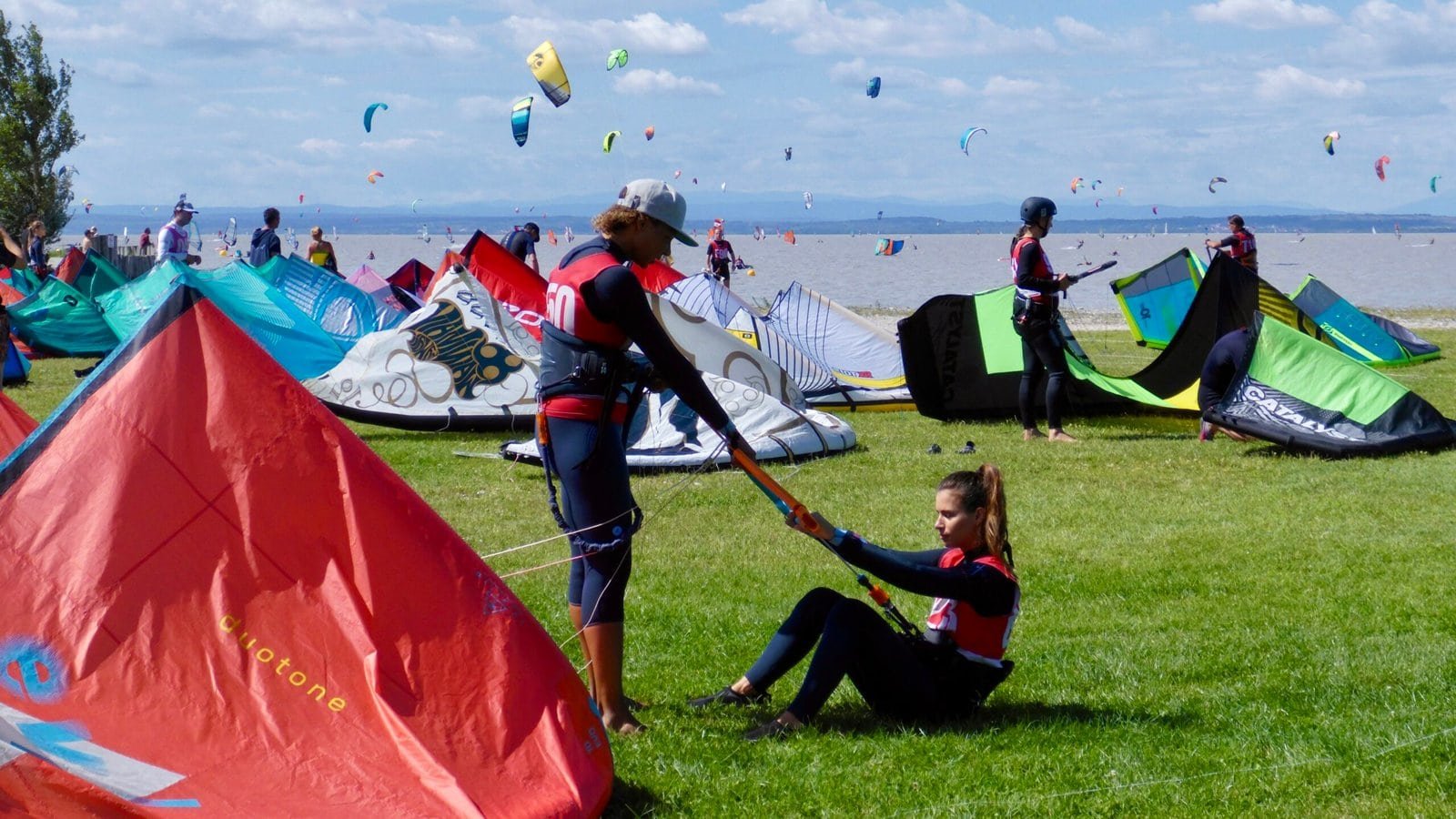
If you plan to start kitesurfing, find a reliable kite school or instructor and take a beginner course. You will learn everything you need without any prior knowledge. Still, there are ways to prepare in advance and speed up your progress.
Kitesurfing has two skills: controlling the kite and controlling the board. You can train both before the course and make your first sessions in the water much easier.
Kite control
Did you fly a kite as a kid? A kite works in a similar way. Even better if you used a stunt kite with two lines. Students who could fly basic figures with it had the training kite under control very fast.
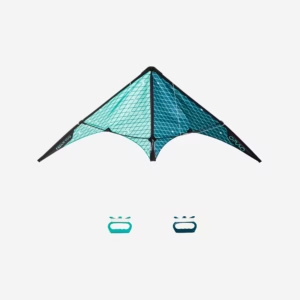
If you never tried one, go to Decathlon. They have a cheap stunt kite for €19.95. Learn to fly simple figure eights and you will arrive well prepared for your first course.
If you do paragliding, you can ignore this advice. Kite control is similar and paraglider pilots do not need much explanation.
Divers are also good students. The sport has little in common with kitesurfing, but divers are careful and use precise control. They know every mistake can cost them their life, and they approach the first steps with a kite with the same care and attention.
A tip for windsurfers. Treat yourself as a complete beginner and head to Decathlon. Your only real advantage is that you can read the wind direction and your course quickly, which helps with orientation.
A disadvantage if you windsurf or wakeboard. You hold the boom and use a lot of strength. You will need to unlearn this on a kite. The bar is only for steering, not holding your weight. Kitesurfing is not a strength sport and works well even for weaker or older riders if we are not talking about jumping.
Board control
Now to the second part, controlling the kiteboard. You will progress fast if you have used any board before. Wakeboard, snowboard, skateboard. The better you handle them, the easier it will be on the kiteboard.
If you have only skied your whole life, start with dry-land training. Your legs need to learn that one goes in front and one behind. If this is not automatic, your water starts will be one fall after another. What can you do?
- Borrow or buy something on wheels, like a skateboard, longboard or surfskate. If you are a complete beginner, choose a low longboard with a drop-through or drop-down truck. A topmount only makes sense for a surfskate.
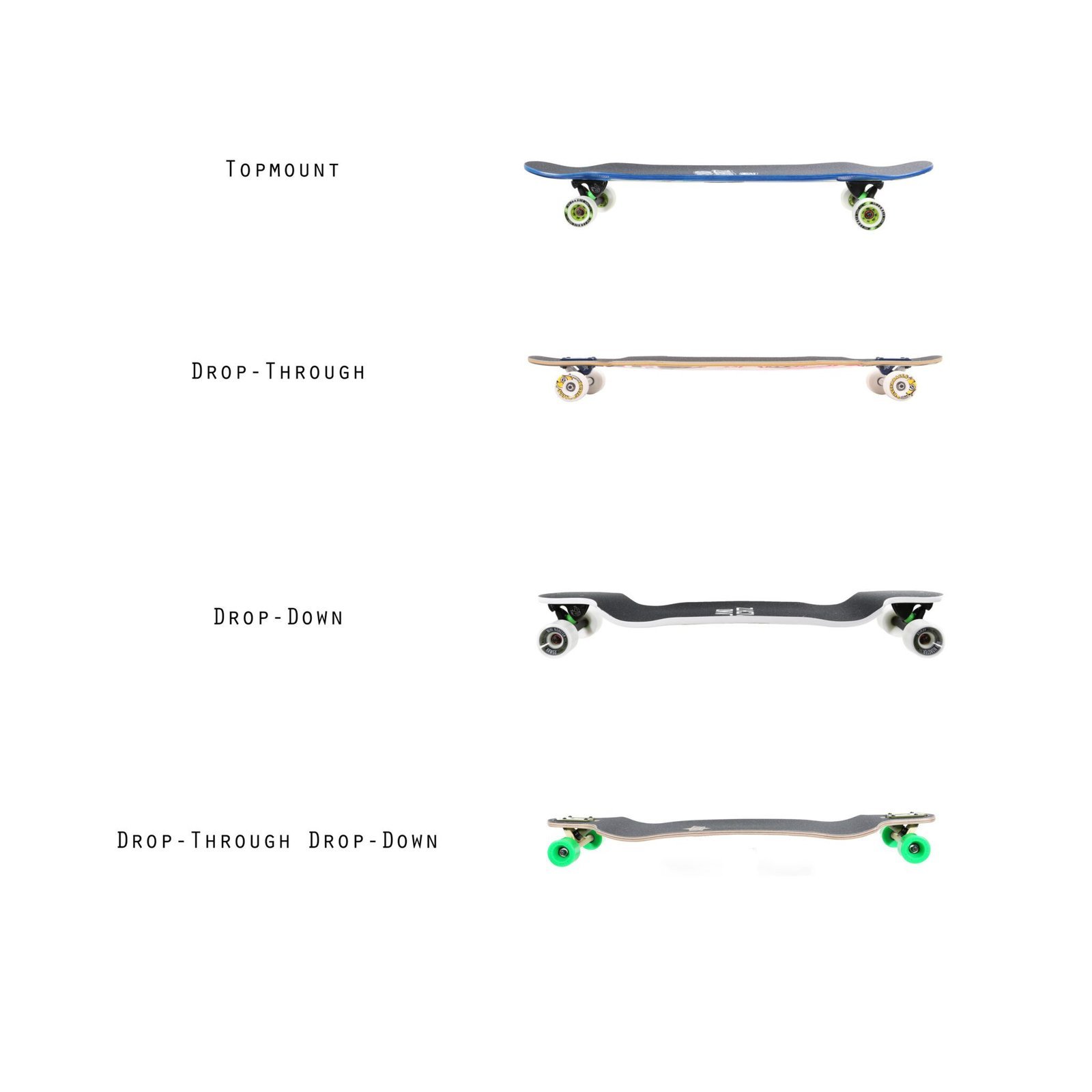
Zdroj: https://baboonboards.com/buyers-guide/
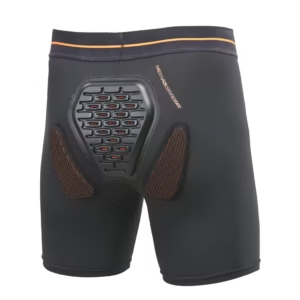
- Is winter coming? Try snowboarding. I remember my first attempts and how much my backside hurt, so I feel a bit sorry for you. But today there are various protectors, so I would definitely choose something that protects at least the back side.
- Is summer coming? Go to the cable park. If you can complete a full lap on a wakeboard, you will be well prepared for the kiteboard.
Kite & Board
The final result will depend on how well you combine your kite and board skills. You will see it during the water start. If you do not control the kite or focus too much on what your legs are doing, the kite will fall into the water and you will have to start again. If you have to focus too much on the kite or your legs do not cooperate, you will not stay on the board and you will nosedive or fall on your backside.
By training both skills you will learn to feel the kite without looking at it and your legs will guide the board automatically. The more you master on land, the less work you will have in the water.
Conclusion
There is always something to learn in this sport, so let’s define the level you should reach after a beginner course. Water start, ride at least 50 meters and stop in a controlled way. At this stage you can continue training on your own. For the next steps like riding upwind, turns or jumps, you can ask for help again. It will be faster than learning through mistakes and you avoid creating bad habits.
If you ask how long it will take, there is no exact answer. My record is teaching someone in 2 hours. Yes, a guy with zero experience and none of the sports mentioned above rode 100 meters after two hours. We had perfect conditions and steady wind. In general younger fast-learning students reach independent level during a five hour full course. Skiers in higher age need more time, but do not let that stop you. My oldest student was 76, a former windsurfer.
So do not wait. Start training on land and do not plan your course for August when the wind is the weakest. If you have questions, contact me. If you want a course for yourself or for friends, the sooner you reach out, the earlier I can put you on the list. I can take only a limited number of students per season because the wind is our limiting factor.